
When customer traffic slows

Slower garden center traffic: how to attract, convert and retain customers in August
For many garden centers, August brings a rapid change in pace. The largest spring weeks are over, vacations affect shopping habits and some customers already consider their gardening season finished.
Customer traffic decreases, but costs do not necessarily follow the same curve. Payroll, inventory, plant maintenance and operating expenses remain. This reality can place significant pressure on profitability.
The 2025 Garden Center Magazine State of the Industry Report illustrates this seasonal concentration. Among surveyed independent garden centers, 74% named May as their best sales month. The same report found that 61% consider high labor costs one of their main challenges.
These figures come from American garden centers, but the pattern is familiar to many horticultural retailers. A short peak period must support a large part of the year while employees, inventory and facilities continue to generate expenses during slower periods.
It would be unrealistic to believe that one tool can solve a decline in customer traffic. An in-store advisory solution cannot create immediate value if no customer is present. On the other hand, an advertising campaign can attract visitors without ensuring they find the right solution after they arrive.
To create more value in August, garden centers need to act at three stages: before, during and after the visit.
Before the visit: create a practical reason to come
Posting regularly is not enough. To generate a visit, content must connect the season with a need the customer recognizes immediately.
Several projects can still motivate a garden center visit in August:
- restore color to containers and garden beds;
- replace plants damaged by heat;
- correct lawn problems;
- choose perennials and shrubs for late summer;
- prepare for fall planting;
- solve an insect, disease or watering problem.
The most effective post is not necessarily the one with the most attractive product. It is often the one that helps customers recognize a problem, imagine the desired result and understand why they should act now.
Facebook and Instagram can serve this purpose when they follow a true horticultural calendar instead of a series of promotions. They keep the garden center in the customer’s mind and create seasonal reasons to visit.
Between visits: reactivate customers you already know
When customer traffic slows, many businesses immediately try to reach more new people. Their best opportunity, however, may already be in their contact list.
These customers know the garden center. They may have purchased annuals in spring, started a vegetable garden or completed a new landscape project. A relevant email newsletter can now suggest the next step.
Unlike social posts, whose reach depends partly on algorithms, email provides a direct connection. It can present a seasonal project, offer useful guidance and lead readers to a website page or a store visit.
Every email should answer one simple question: Why should this customer return this week?
A newsletter about refreshing garden beds, for example, can explain the signs of decline, the possible interventions and the useful product categories. It does more than announce a discount. It turns a concern into a project.
During the visit: turn a question into a complete solution
Attracting the customer is only part of the work. Once the customer arrives, the garden center must help that person find an appropriate answer.
A simple question such as “What can I plant here?” or “How can I repair this section of lawn?” may require several pieces of information: exposure, soil type, dimensions, maintenance expectations and complementary products.
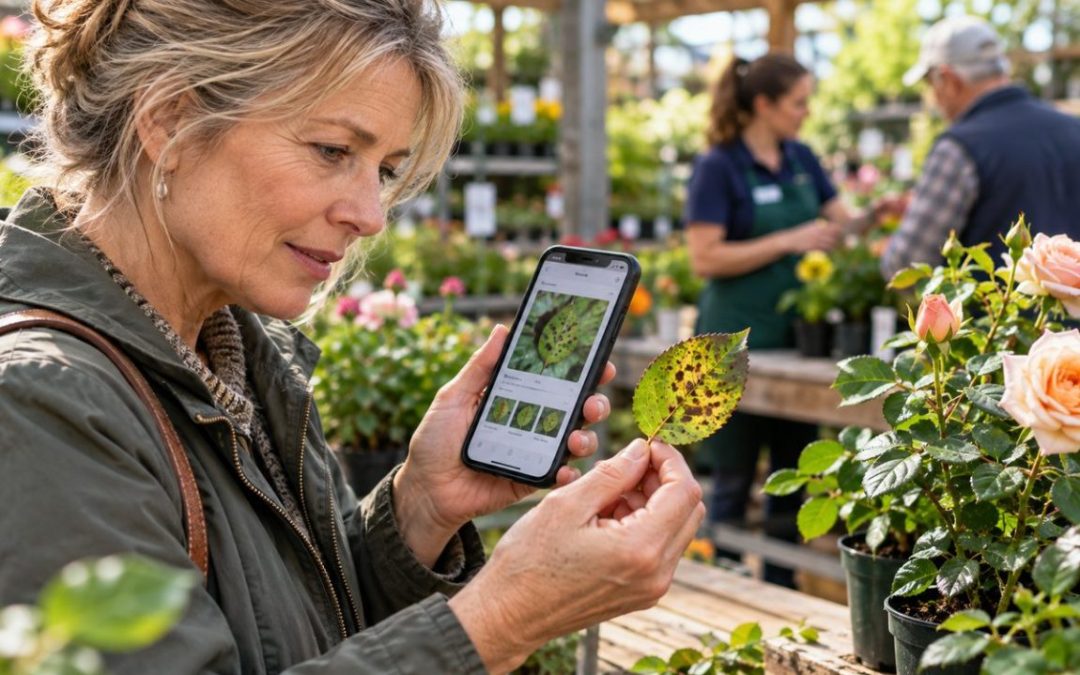
In this context, Garden Expert helps customers clarify their needs and access horticultural guidance. It can also support less experienced employees and suggest the elements needed to complete the project.
The goal is not to replace the human conversation. It is to make expertise easier to access when the specialist is already busy, when an employee wants to validate a recommendation or when a customer prefers to begin independently.
This approach also supports cross-merchandising. A customer choosing a plant may need soil, compost, mulch or a rooting product. A relevant recommendation improves the customer’s chance of success while increasing the potential value of the visit.
After the visit: maintain the relationship
The sale should not end the relationship. Questions asked in the store and online can reveal the customer’s real concerns. Those questions can become ideas for future social posts and email newsletters.
A frequent lawn question can inspire an educational post. Strong interest in fall planting can become the subject of the next email. A recurring problem can become a longer article.
The customer journey becomes a cycle:
- content attracts attention;
- email brings the customer back;
- Garden Expert and the team help complete the project;
- observed needs inform the next communications.
A coordinated strategy instead of three isolated services
Facebook, email newsletters and Garden Expert do not solve the same problem.
Social media creates visibility and gives customers a reason to visit. Email retains and reactivates known customers. Garden Expert helps serve people who are ready to buy.
The coordination between these services creates the greatest value.
When customer traffic slows, the answer is not simply to post more often, send more promotions or reduce working hours. Each interaction must become more relevant: the right subject, for the right customer, at the right moment in the journey.
Horticulture Marketing supports garden centers at each of these stages with horticultural content, email newsletters and Garden Expert.
Would you like to attract, convert and retain more customers, even during slower periods? [Request a short presentation of our approach.]