by Stephan Vincent | Oct 13, 2026 | Uncategorized
Lire en français
Your customers plan their spring orders, then adjust their purchases as their needs change throughout the season. They want to know which plants to order, in which sizes, at what price and under what delivery terms. For your team, answering these questions comes on top of production, order preparation and follow-ups by your sales representatives.
Grower Expert combines a digital advisor on your website with a platform that simplifies ordering, logistics and marketing. Customized with your logo, plants and business information, this white-label solution supports greenhouse and nursery growers in their relationships with garden centers and professional buyers.
Prepare spring prebook orders, then support in-season purchases
For greenhouse and nursery growers, the ordering cycle often begins in the fall, when garden centers reserve the plants they will receive the following spring.
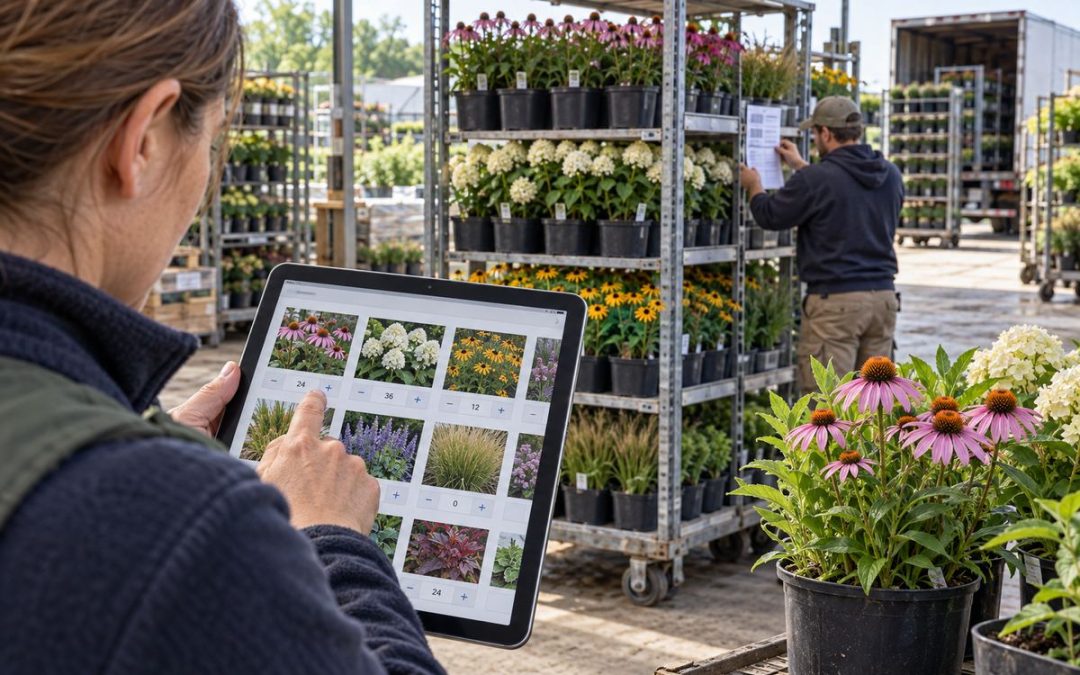
Grower Expert lets buyers browse your catalog, explore plant photos and horticultural descriptions, and prepare their orders based on the sizes you offer. Your team can help customers plan their purchases and make communication easier.
During the season, availability lists take over to support replenishment. A text message can notify garden centers when a new list is ready to view. They can then explore your current offering and prepare their next orders.
Help buyers choose the right plants
A catalog or availability list shows what you offer. To order with confidence, buyers may also need to understand a plant’s characteristics, uses or preferred growing conditions.
The digital advisor answers questions using information from your website and the additional details you provide. It helps customers explore your catalog and learn more about your plants and services, even when your team is busy or your business is closed.
Your expertise becomes more accessible, giving your sales representatives more time to understand customers’ needs and develop their accounts.
Provide access to pricing and simplify ordering
Grower Expert provides access to pricing based on customer identification. Buyers can view the information intended for them, select plants, specify quantities and prepare their orders directly with your business.
Order minimums and delivery terms can be explained along the way, giving customers the information they need before submitting their requests.
An order summary shared with the grower and buyer makes it easier to review the order and follow up.
Support order preparation and delivery
Once plants have been selected, clear information remains essential. Grower Expert can help locate plants within your greenhouses or nursery and make your delivery policies easier to find.
The goal is to reduce time spent searching for information and answering repetitive questions, so your team can focus on preparing orders and serving customers.
Promote your plants to your own customers
Grower Expert makes it easier to create social media posts and newsletters for your own customers: garden centers, landscapers and other professional buyers.
In the fall, these communications can introduce your catalog and invite customers to reserve plants for spring. During the season, they can announce updated availability, highlight selected plants and encourage replenishment orders.
Your photos and horticultural information become tools that support your sales representatives and help generate new orders.
Grower Expert can also help prepare promotional materials that your customers can use in their garden centers to showcase your plants to consumers.
A solution that reflects your business
With Grower Expert, your catalog, business information and expertise support customers throughout their buying journey.
You grow the plants. Grower Expert helps you showcase them, simplify ordering and support their marketing.
Explore Grower Expert or contact Horticulture Marketing to discover how Grower Expert can fit your business.

by Stephan Vincent | Aug 12, 2026 | Garden Expert AI, INbound-CRM, Info-Flyers, Newsletters, Social Medias, Uncategorized

Slower garden center traffic: how to attract, convert and retain customers in August
For many garden centers, August brings a rapid change in pace. The largest spring weeks are over, vacations affect shopping habits and some customers already consider their gardening season finished.
Customer traffic decreases, but costs do not necessarily follow the same curve. Payroll, inventory, plant maintenance and operating expenses remain. This reality can place significant pressure on profitability.
The 2025 Garden Center Magazine State of the Industry Report illustrates this seasonal concentration. Among surveyed independent garden centers, 74% named May as their best sales month. The same report found that 61% consider high labor costs one of their main challenges.
These figures come from American garden centers, but the pattern is familiar to many horticultural retailers. A short peak period must support a large part of the year while employees, inventory and facilities continue to generate expenses during slower periods.
It would be unrealistic to believe that one tool can solve a decline in customer traffic. An in-store advisory solution cannot create immediate value if no customer is present. On the other hand, an advertising campaign can attract visitors without ensuring they find the right solution after they arrive.
To create more value in August, garden centers need to act at three stages: before, during and after the visit.
Before the visit: create a practical reason to come
Posting regularly is not enough. To generate a visit, content must connect the season with a need the customer recognizes immediately.
Several projects can still motivate a garden center visit in August:
- restore color to containers and garden beds;
- replace plants damaged by heat;
- correct lawn problems;
- choose perennials and shrubs for late summer;
- prepare for fall planting;
- solve an insect, disease or watering problem.
The most effective post is not necessarily the one with the most attractive product. It is often the one that helps customers recognize a problem, imagine the desired result and understand why they should act now.
Facebook and Instagram can serve this purpose when they follow a true horticultural calendar instead of a series of promotions. They keep the garden center in the customer’s mind and create seasonal reasons to visit.
Between visits: reactivate customers you already know
When customer traffic slows, many businesses immediately try to reach more new people. Their best opportunity, however, may already be in their contact list.
These customers know the garden center. They may have purchased annuals in spring, started a vegetable garden or completed a new landscape project. A relevant email newsletter can now suggest the next step.
Unlike social posts, whose reach depends partly on algorithms, email provides a direct connection. It can present a seasonal project, offer useful guidance and lead readers to a website page or a store visit.
Every email should answer one simple question: Why should this customer return this week?
A newsletter about refreshing garden beds, for example, can explain the signs of decline, the possible interventions and the useful product categories. It does more than announce a discount. It turns a concern into a project.
During the visit: turn a question into a complete solution
Attracting the customer is only part of the work. Once the customer arrives, the garden center must help that person find an appropriate answer.
A simple question such as “What can I plant here?” or “How can I repair this section of lawn?” may require several pieces of information: exposure, soil type, dimensions, maintenance expectations and complementary products.
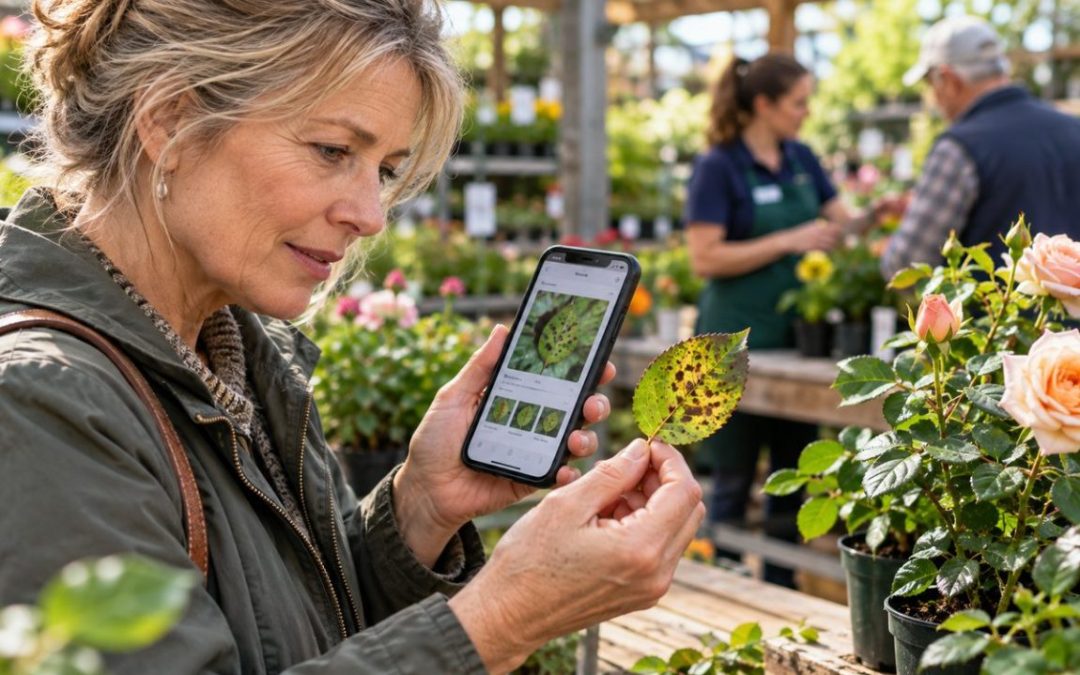
In this context, Garden Expert helps customers clarify their needs and access horticultural guidance. It can also support less experienced employees and suggest the elements needed to complete the project.
The goal is not to replace the human conversation. It is to make expertise easier to access when the specialist is already busy, when an employee wants to validate a recommendation or when a customer prefers to begin independently.
This approach also supports cross-merchandising. A customer choosing a plant may need soil, compost, mulch or a rooting product. A relevant recommendation improves the customer’s chance of success while increasing the potential value of the visit.
After the visit: maintain the relationship
The sale should not end the relationship. Questions asked in the store and online can reveal the customer’s real concerns. Those questions can become ideas for future social posts and email newsletters.
A frequent lawn question can inspire an educational post. Strong interest in fall planting can become the subject of the next email. A recurring problem can become a longer article.
The customer journey becomes a cycle:
- content attracts attention;
- email brings the customer back;
- Garden Expert and the team help complete the project;
- observed needs inform the next communications.
A coordinated strategy instead of three isolated services
Facebook, email newsletters and Garden Expert do not solve the same problem.
Social media creates visibility and gives customers a reason to visit. Email retains and reactivates known customers. Garden Expert helps serve people who are ready to buy.
The coordination between these services creates the greatest value.
When customer traffic slows, the answer is not simply to post more often, send more promotions or reduce working hours. Each interaction must become more relevant: the right subject, for the right customer, at the right moment in the journey.
Horticulture Marketing supports garden centers at each of these stages with horticultural content, email newsletters and Garden Expert.
Would you like to attract, convert and retain more customers, even during slower periods? [Request a short presentation of our approach.]
Source
Garden Center Magazine – 2025 State of the Industry Report
by Stephan Vincent | Dec 9, 2025 | Garden Expert AI
🌿 Why Garden Centers That Adopt Specialized AI Gain a Competitive Advantage
In recent years, the horticultural industry has faced rapid change: shifting consumer expectations, staffing shortages, rising operational costs, and the need for better customer education. Garden centers across North America are navigating these challenges while trying to maintain a warm, knowledgeable, and memorable customer experience.
While general-purpose AIs have grown in popularity, a new generation of specialized AI tools—designed specifically for the horticultural world—is now emerging. These tools don’t replace the human touch that defines a great garden center. Instead, they support teams, improve customer guidance, and streamline operations in ways that were previously impossible.
Here are the key reasons why garden centers that adopt specialized AI are gaining a real competitive advantage.
🌱 1. Consistent, reliable expertise, available 24/7
Customers often arrive with similar questions:
-
“What plant will grow best in shade?”
-
“How much sun does this need?”
-
“Is this safe for pets?”
-
“Where can I find hydrangeas?”
General AI tools can offer information, but they cannot provide store-specific guidance—such as inventory availability, exact plant names you carry, or the location of products within your store.
Specialized horticultural AI, on the other hand, is built around real plant databases, local growing conditions, and your curated inventory. It speaks the language of your garden center.
This means your customers receive:
✔️ accurate answers
✔️ consistent advice
✔️ tailored recommendations
✔️ guidance that matches your products, not generic ones
And staff no longer need to repeat the same explanations hundreds of times per week.
🌱 2. Support for employees during peak seasons
Every spring, the same pattern emerges: long lines, customers with urgent questions, and new seasonal employees trying to learn quickly.
Specialized AI helps by:
-
answering common horticultural questions
-
guiding customers to the right aisle, greenhouse, or bench
-
reducing the workload on your newer staff
-
allowing experienced staff to focus on higher-value interactions
This doesn’t replace human expertise.
It amplifies it.
Employees feel less pressure, and customers get better service—even on the busiest weekends of the year.
🌱 3. A modern customer experience that inspires confidence
Today’s consumers expect convenience, clarity, and immediate access to information.
When a garden center provides tools that help customers shop more confidently, the effect is powerful:
✔️ higher conversion rates
✔️ fewer returns due to plant mismatch
✔️ longer dwell time on-site
✔️ more satisfied, loyal customers
A customer who feels supported will come back—and will talk about the experience.
🌱 4. Personalized shopping guidance
General AI cannot know:
-
what brands you carry
-
which annuals or shrubs are in stock
-
where the Proven Winners or First Editions benches are
-
what your fertilizer selection looks like
-
how your greenhouse is organized
Specialized AI is configured specifically for your store.
It can provide:
This level of personalization is impossible with generic solutions.
🌱 5. A solution that grows with your business
One of the greatest advantages of specialized AI is its adaptability.
It can evolve with:
-
your new products
-
your seasonal changes
-
your suppliers
-
your updated layouts
-
your staff feedback
And because the model is trained for horticulture and retail, updates are simple and fast.
In other words, the tool becomes better every season.
🌱 6. Competitive advantage in an industry that’s modernizing
Garden centers that adopt specialized AI early position themselves ahead of the curve.
They benefit from:
-
improved customer satisfaction
-
increased operational efficiency
-
stronger employee support
-
a modernized brand image
-
technology that blends seamlessly with the garden center experience
As more customers expect digital support in retail environments, specialized AI becomes not just a convenience—but a strategic advantage.
🌿 Conclusion: Better service, less pressure, stronger results
Specialized AI is not about replacing horticultural expertise.
It’s about elevating it.
Garden centers that embrace this technology gain:
✔️ happier customers
✔️ empowered employees
✔️ simplified operations
✔️ a more resilient business
The industry is changing, and early adopters are discovering what the next generation of retail horticulture looks like:
a perfect balance between human expertise and intelligent support.

by Stephan Vincent | Nov 19, 2025 | Newsletters
Fall and winter are often seen as quieter seasons for garden centers. Sales slow down, aisles are less busy, and the weather discourages spontaneous visits. Yet these months represent a strategic opportunity to strengthen your connection with customers, stay top of mind, and prepare the ground for the upcoming season. The ideal tool to achieve this? A well-designed horticultural newsletter program.
Staying Connected During the Off-Season
When temperatures drop, in-store activity naturally decreases. But your customers don’t disappear: they keep thinking about their indoor plants, their garden décor, or their plans for spring. A newsletter program allows you to stay present in their daily lives, even from a distance.
By sending practical tips, inspiring ideas, and special offers regularly, you show that your expertise doesn’t stop when summer ends. This consistency builds loyalty and encourages customers to return as soon as the opportunity arises.
Providing Season-Appropriate Content
A strong fall-winter newsletter program goes beyond promoting products — it delivers real value. For example:
• Seasonal advice: how to protect shrubs from frost, which indoor plants to choose, how to extend fall blooms.
• Décor inspiration: ideas for integrating natural elements into Christmas décor or creating a winter centerpiece.
• Homemade recipes: using herbs grown indoors, turning fall harvests into preserves or jams.
• New arrivals and promotions: highlight seasonal products such as bulbs to plant or winter accessories.
This variety keeps your subscribers interested and gives them a good reason to open every newsletter.
Strengthening Your Expert Image
Each newsletter reinforces your expertise. The more precise, relevant, and easy to apply your advice is, the more your credibility grows. A customer who sees you as a trusted expert will naturally return when it’s time to buy.
Boosting Off-Season Sales
Fall and winter bring many opportunities: décor sales, indoor plant promotions, wild bird supplies, gardening tools, and more. A newsletter program puts these products in front of a highly engaged audience.
Preparing the Next Season
Winter is the ideal time to:
• Introduce upcoming new products
• Launch pre-orders for seeds or starter plants
• Inspire spring project ideas
A Tool That’s Measurable and Adaptable
With analytics (open rates, clicks, etc.), you can adjust your content to maximize engagement.
To know more about the Newsletter service
👉 Click Here
In summary, staying close to your customers during fall and winter is a winning strategy. A well-structured horticultural newsletter program helps maintain strong relationships, reinforces your expert image, and generates sales all year long.